built for being
An immersive, multimedia concert for Frank Lloyd Wright-designed sites.
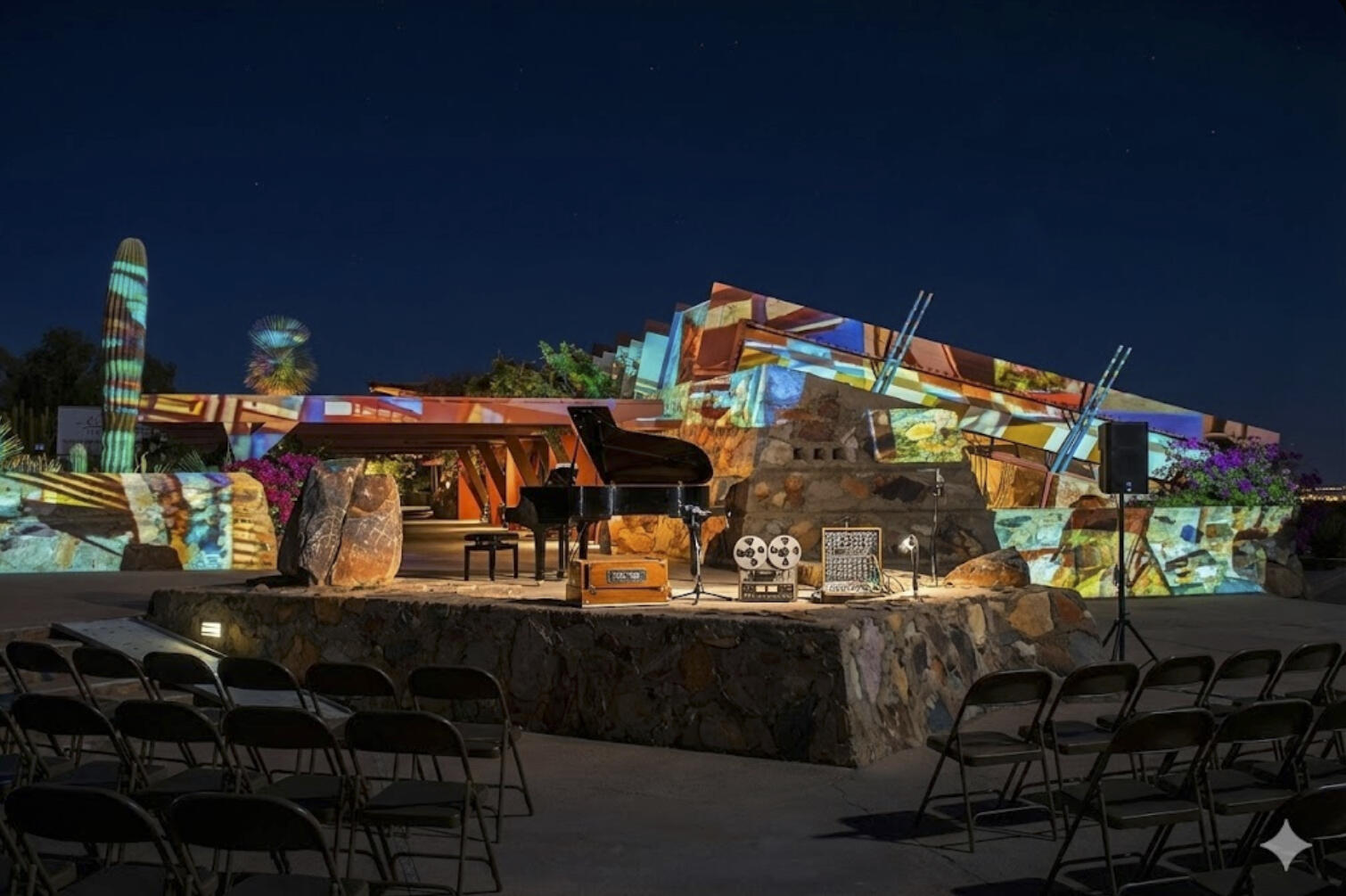
AI-generated concept rendering: Taliesin West (Scottsdale, AZ)
Subscribe
"Never miss the idea that architecture and music belong together. They are practically one."—Frank Lloyd Wright
Make a tax-deductible donation to this project’s development!
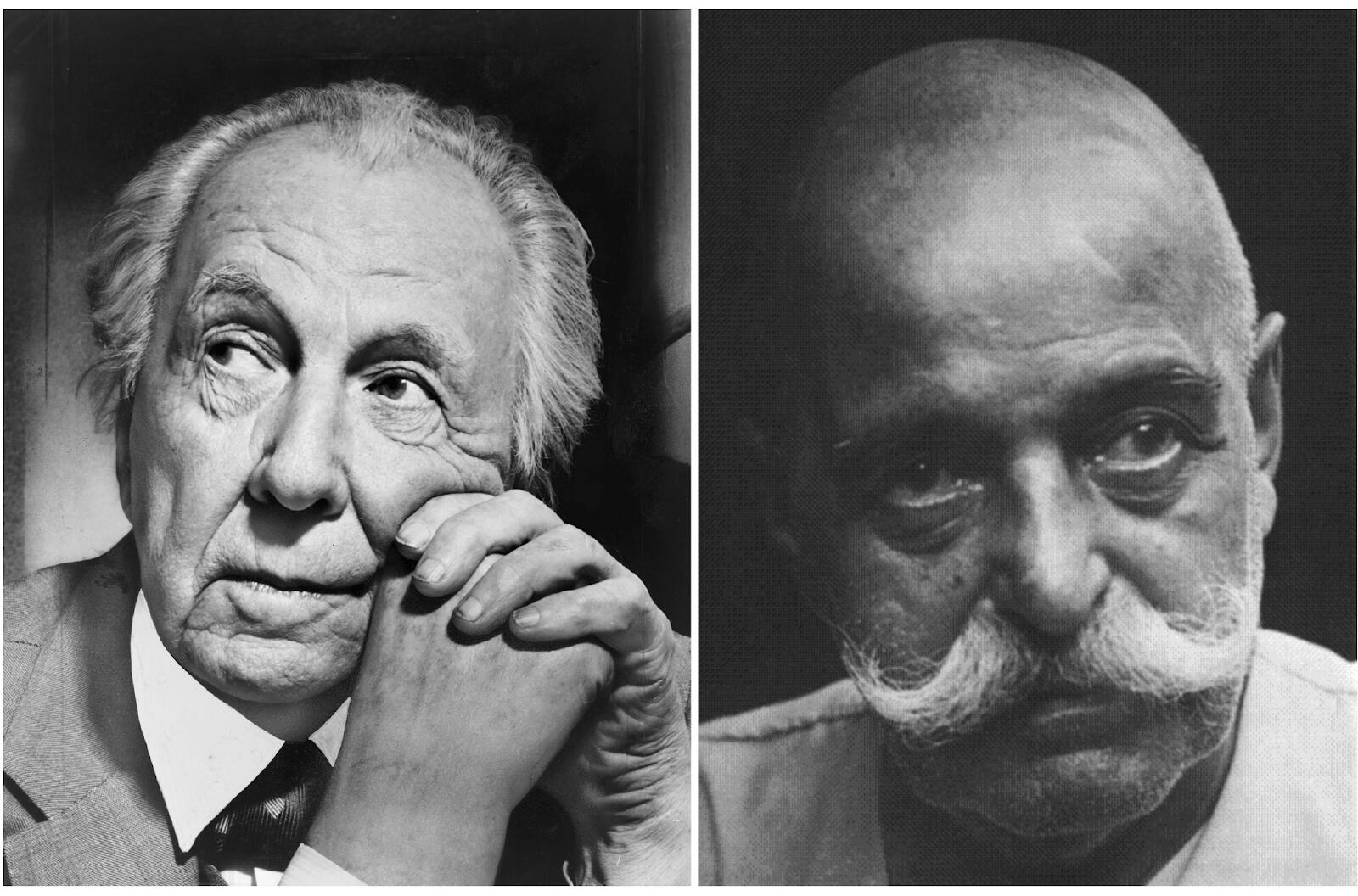
built for being activates Frank Lloyd Wright’s work through an immersive synthesis of music and projection, transforming architecture into a playable multimedia instrument. Designed specifically for Wright’s built sites, this scalable performance offers a next-generation artistic encounter with the architect’s legacy.Thematically, the performance revolves around the surprising kinship between Wright and the composer/philosopher G. I. Gurdjieff, conjoining their radical visions for human potential & development. By weaving their ideas and works together through contemporary performance, the concert illuminates how they speak directly to the challenges and anxieties of our present moment.
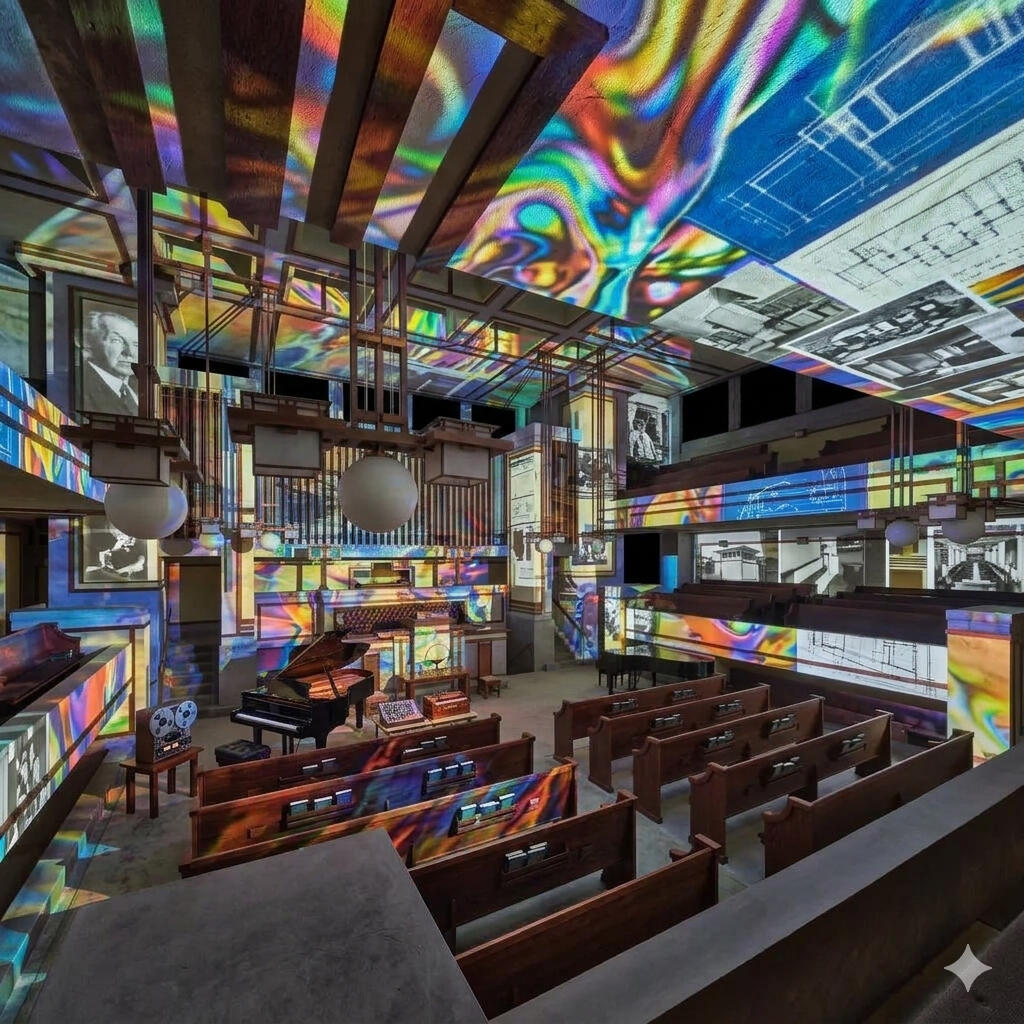
AI-generated concept rendering: Unity Temple (Oak Park, IL)
The Music
The sounds of the piano; Indian harmonium; and tape-based sound design;
The Gurdjieff/de Hartmann piano repertoire — a genre-defying oeuvre bridging ancient Eastern traditions with early 20th-century modernism, designed to catalyze a specific state of internal presence;
Unpublished compositions by Olgivanna and Frank Lloyd Wright, from the archives at Taliesin West;
Context-adding selections by composers like Tchaikovsky and Erik Satie;
The Visuals
A kinetic visual program using projectors and lighting to activate the architectural features of the site;
Abstract and representational imagery from research and archives;
Elements of ‘expanded cinema’ and ‘light sculpture’, filling three-dimensional space;
Make a tax-deductible donation to this project’s development!
The Story
Wright and Gurdjieff were friends. Though their worlds were different, they were bound by mutual affinity and consonant visions for human potential and development. When Gurdjieff first visited Taliesin in 1934, Wright recognized a kindred spirit who sought to break the "mechanical habits" of the human mind to liberate the soul, just as Wright "broke the box" of traditional architecture to liberate the inhabitant.The bridge between them was Olgivanna Lloyd Wright. A star pupil and dancer at Gurdjieff’s Institute for the Harmonious Development of Man in the 1920s, she modeled Wright’s Taliesin Fellowship based on Gurdjieff’s teachings — creating a lifestyle where art, labor, and philosophy were indistinguishable. Under her influence, Wright’s apprentices practiced Gurdjieff’s rigorous music and choreographies which reflected the same ‘organic’ mathematical principles of Wright’s architecture.Reintroducing Gurdjieff’s compositions to Wright’s surviving sites illuminates a hidden corner of the 20th century American avant-garde, inviting timely meditations on the automation of human labor; the cultivation of focused consciousness; and the relationship between humankind and the natural world.
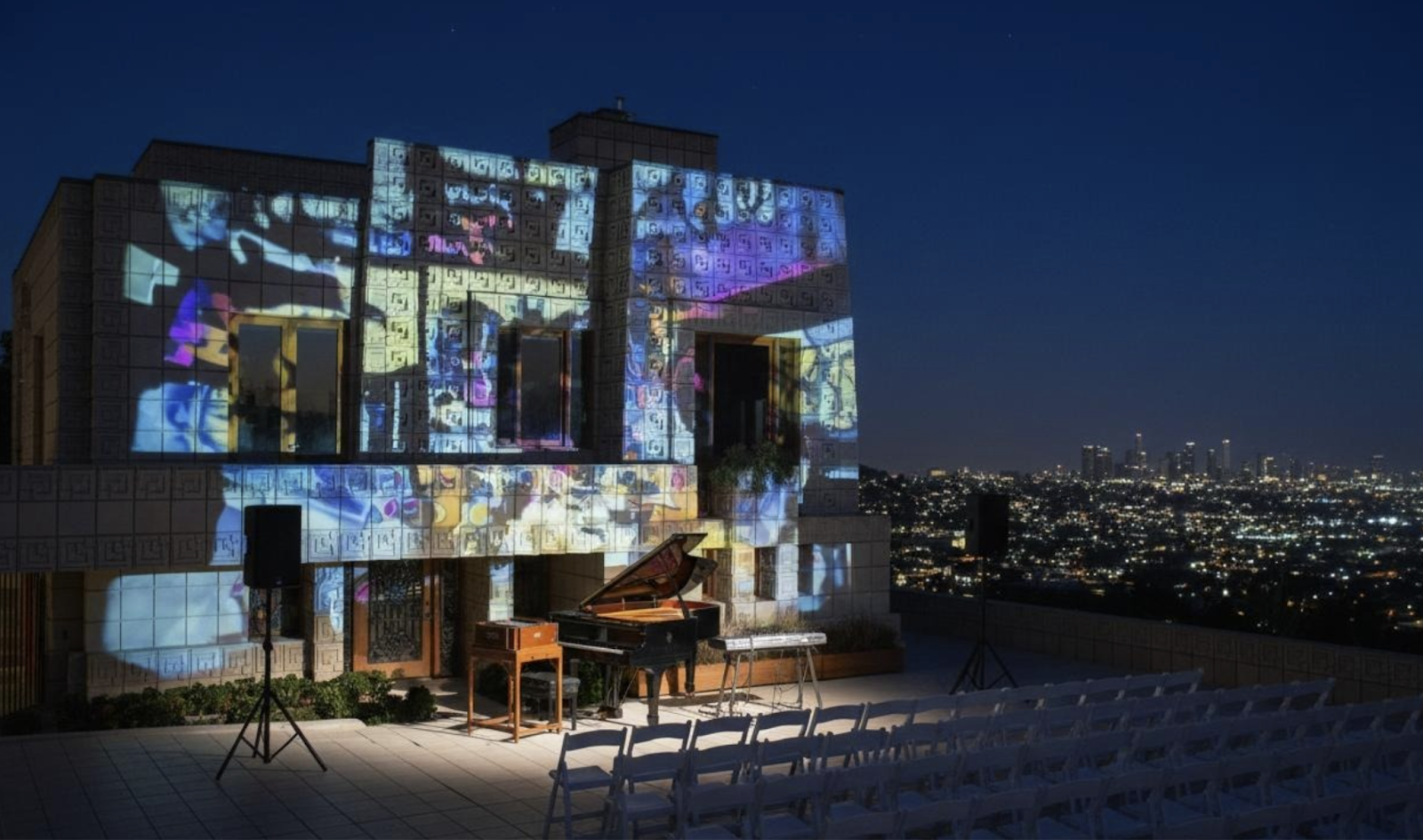
AI-generated concept rendering: Ennis House (Los Angeles, CA)
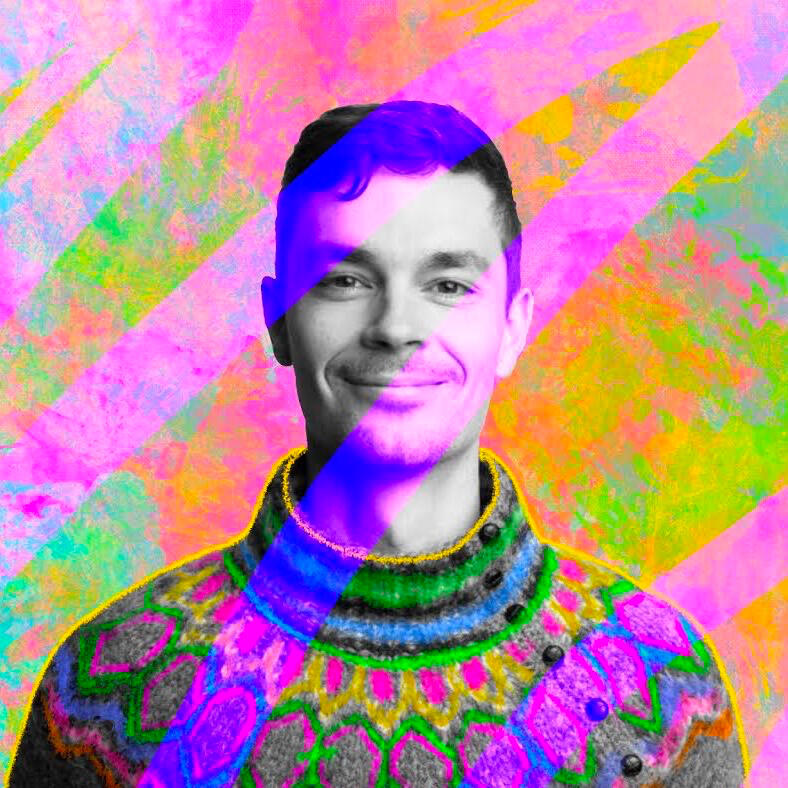
Lead artist Graham Scott is a composer and performer practicing where music encounters questions of identity, belonging and cultural exchange. With a focus on works which blur genres, remix forms and subvert audience expectations, he has given more than 700 performances in 87 cities worldwide over a 20-year career encompassing projects in theatre, concerts and album recordings which have garnered the recognition of the Canadian Folk Music Awards; The Drama Desk Awards; The New York Times; The New Yorker; the Toronto Theatre Critics’ Awards; and many others. Graham is based in Oak Park, IL — home to many Wright sites and a passionate community of fellow enthusiasts.
[email protected]
Make a tax-deductible donation to this project’s development!